A few days ago, I was reading a post from Microsoft CEO Satya Nadella when one line caught my attention:
As someone who spends a lot of time talking to business leaders about technology and business outcomes, I thought I understood what he meant.
AI isn’t exactly a small investment anymore. Organizations are spending on software, infrastructure, governance, training, and all the work that comes with rolling something new out across the business.
But that wasn’t where he was going.
He was talking about knowledge.
That idea stayed with me for a few days.
The more I paid attention to how people around me were using AI, the more I noticed how much context sits behind what looks like a simple prompt. We don’t just ask a question.
It’s easy to overlook because these interactions feel quite normal now. But the more I paid attention, the more I realized how much business knowledge sits behind what looks like a simple AI prompt.
But they’re not empty exchanges.
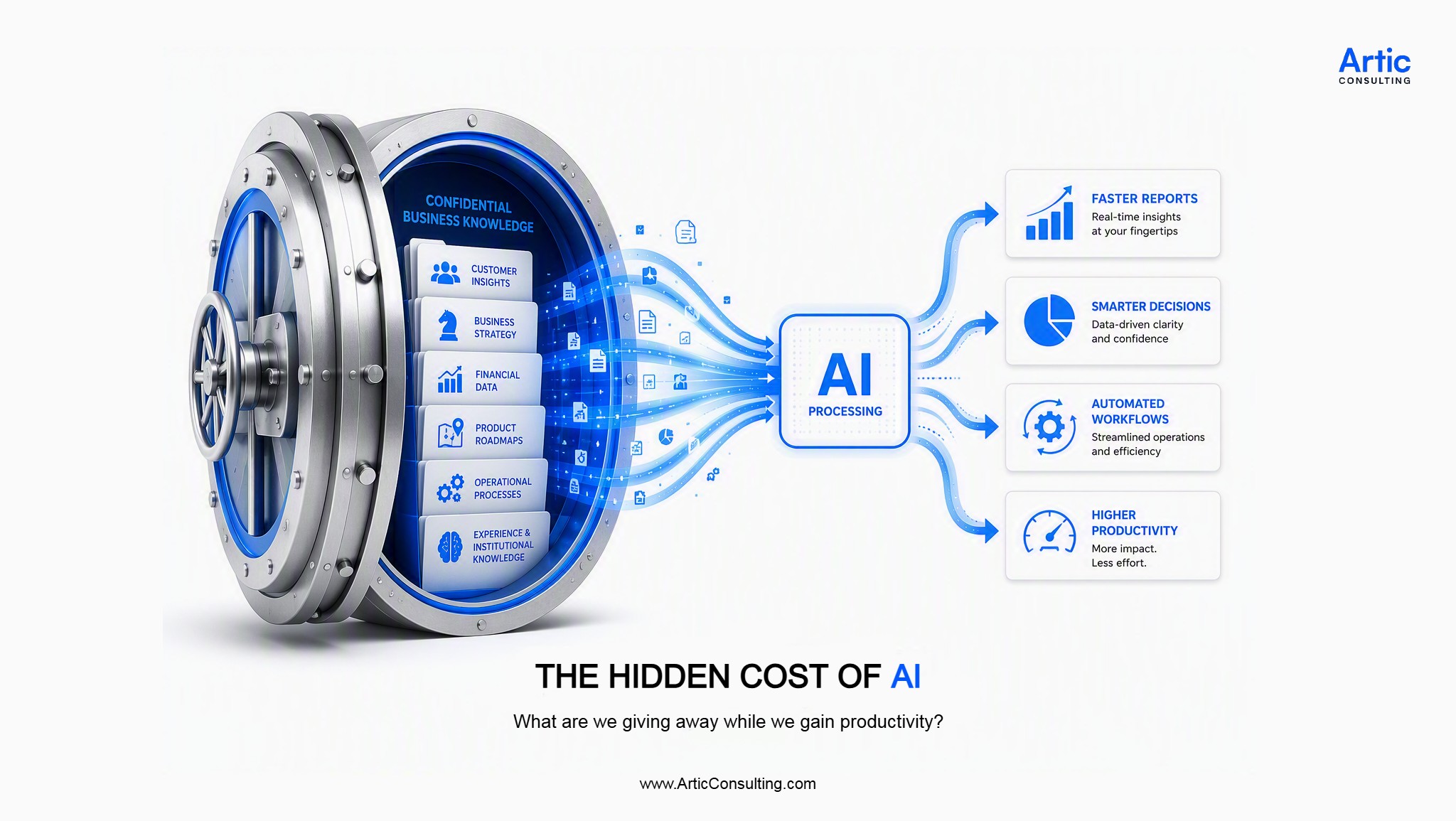
Every prompt contains a little bit of business context. Every correction reflects judgment. Every explanation carries experience that someone has built over years of doing their job.
The conversation around AI often focuses on what the technology is producing like faster work, better insights, and new efficiencies.
What I found myself thinking about instead was everything being fed into the process before those outcomes ever show up.
Krunal Raol, Technical Delivery Manager at Artic Consulting said that,
“When people talk about AI, they usually start with the technology itself. I understand why. The pace of innovation has been incredible.
What interests me more is what organizations bring to it.
A model can generate an answer, but the real value often comes from the knowledge people add along the way. Their understanding of customers, their industry experience, the decisions they’ve made, and the lessons they’ve learned over time.
That’s the part of the AI conversation I think deserves more attention.”
The Best People in the Business Already Know This
One thing I’ve noticed after years of working with clients is that the most experienced people rarely have all the answers written down.
They know which customer is likely to push back.
They remember why a decision was made three years ago.
They can spot a bad recommendation in seconds because they’ve seen the same situation before.
None of that appears in a dashboard.
And yet it’s often the difference between an average outcome and a successful one.
AI can help surface information. What it can’t do on its own is recreate decades of experience inside an organization.
That’s still coming from people.
The Question Most Organizations Haven’t Answered Yet
One thing I’ve been wondering about is what happens after the AI project is considered successful.
The tool is rolled out. People start using it. Productivity improves. The business moves on to the next priority.
But the learning doesn’t stop there.
Teams figure out better ways to use the tool than they did in week one. They discover what works, what doesn’t, and where human review still matters. Certain prompts get passed around. Certain approaches become standard practice. People start building on each other’s experience.
I’ve seen that happen on delivery projects long before AI entered the picture.
The difference now is that these systems become part of that learning process.
Over time, an organization develops its own way of working with AI. Not because someone writes a policy document, but because people gradually learn what delivers the best results in their environment.
That’s the part I don’t hear discussed very often.
Most conversations focus on selecting the right platform, model, or use case. Far fewer focus on what organizations learn after adoption and how that learning gets shared across teams.
On the same topic, Krunal Raol, Technical Delivery Manager at Artic Consulting had also said that,
“Data governance has been part of enterprise conversations for years. What we’re starting to see now is a growing need to think about knowledge governance as well. Organizations need to understand where institutional knowledge is being used, how it’s being captured, and how they continue to benefit from the value being created.”
Closing Thoughts
One of the reasons Nadella’s observation has stayed with me is that it shifts the conversation away from technology.
AI models will continue to improve. New tools will arrive. Adoption will grow.
But behind every successful AI initiative are people who understand the business, the customers, the risks, and the decisions that led to where the organization is today.
That knowledge doesn’t become less valuable because AI is involved. If anything, it becomes more valuable.
Is Your AI Strategy Protecting What Makes Your Business Unique?
Explore how Artic Consulting helps organizations implement AI responsibly while safeguarding their most valuable business assets.
Get started
Ready to level-up your business?

Amit Giri has 14 years of experience helping organizations navigate technology decisions and align solutions with business goals. His interests include artificial intelligence, Microsoft technologies, cloud solutions, data analytics, digital transformation, and process improvement. Through Artic Insights, Amit shares practical perspectives on using technology to solve real-world business challenges and create lasting value.